Wood Burning Sauna
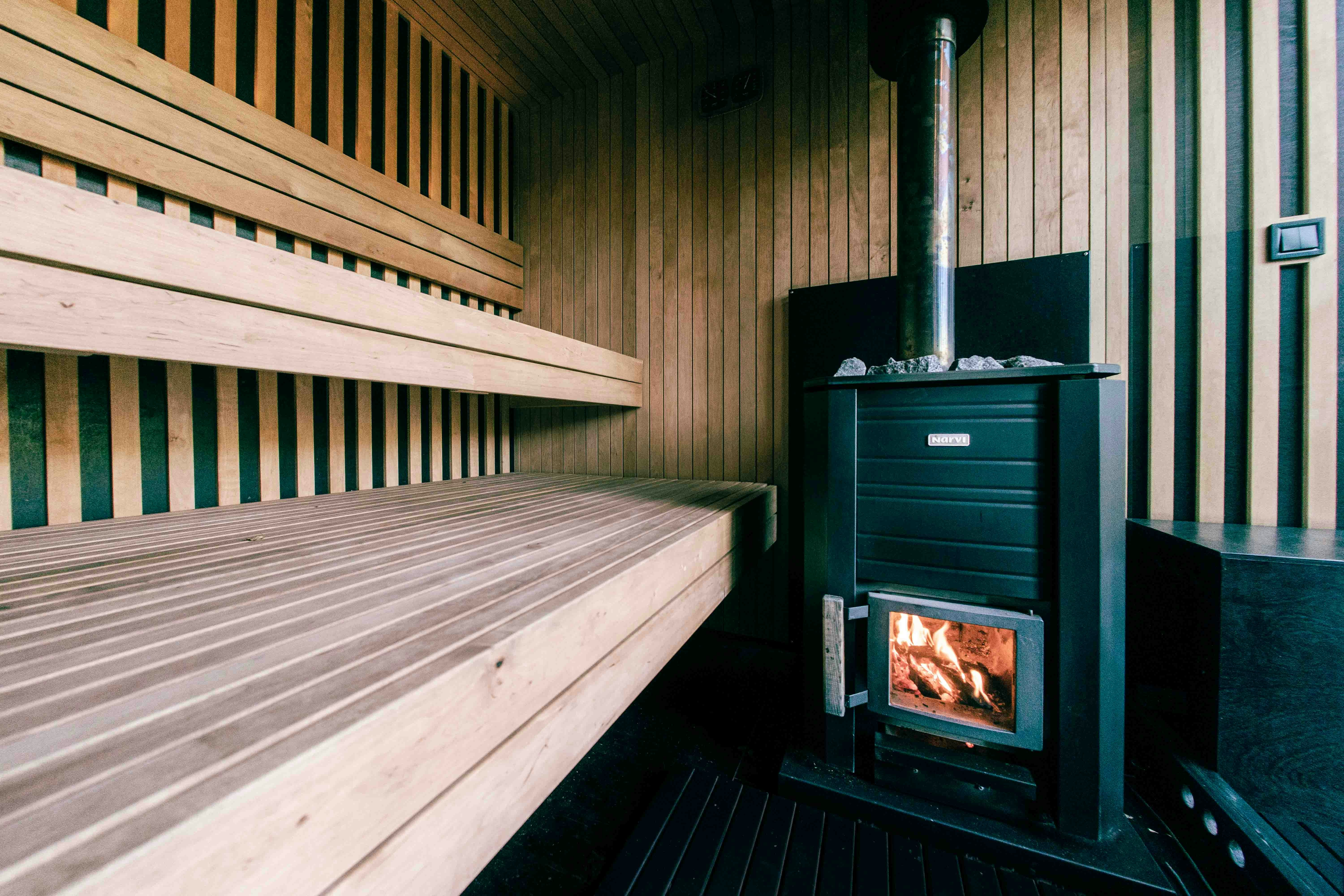
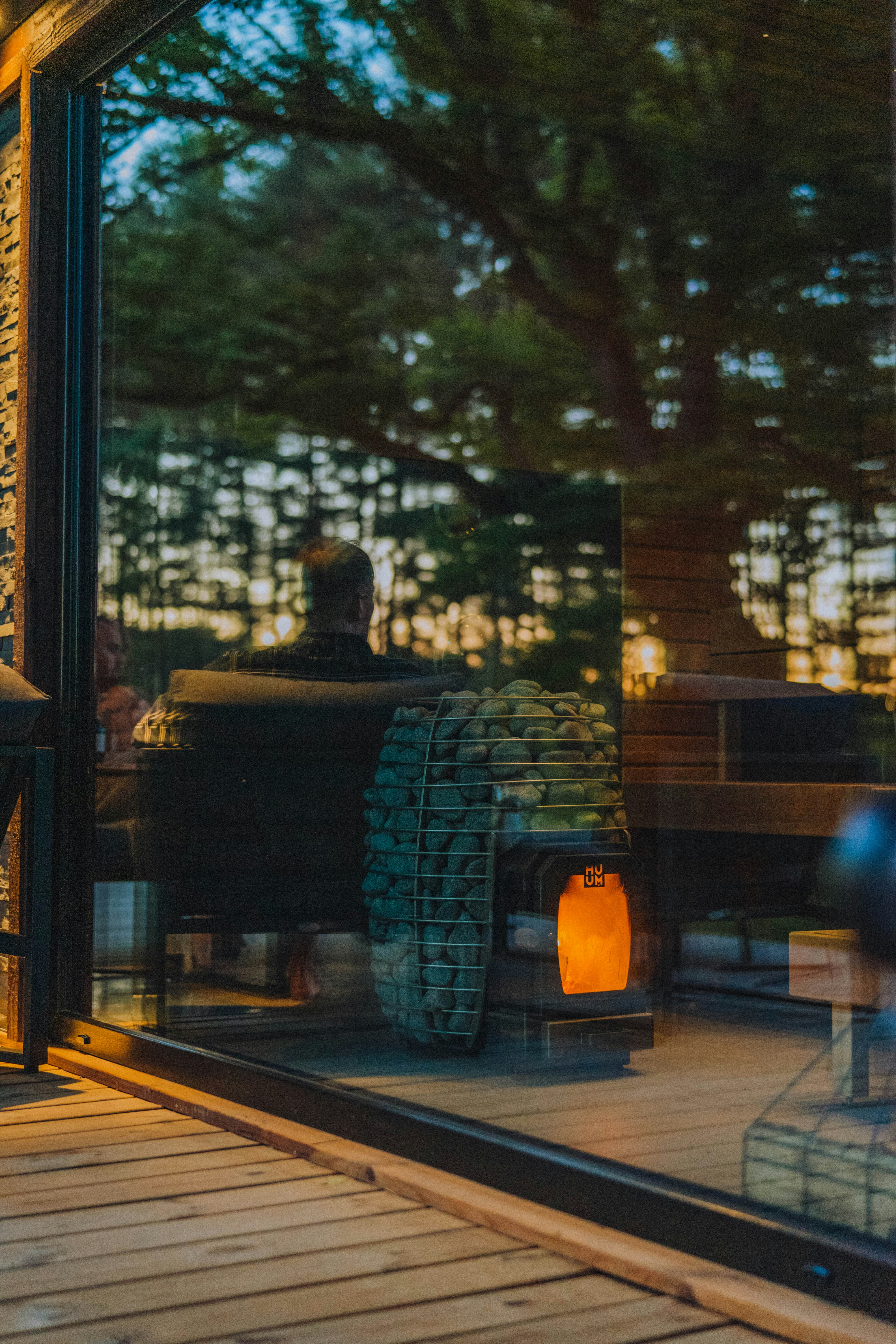
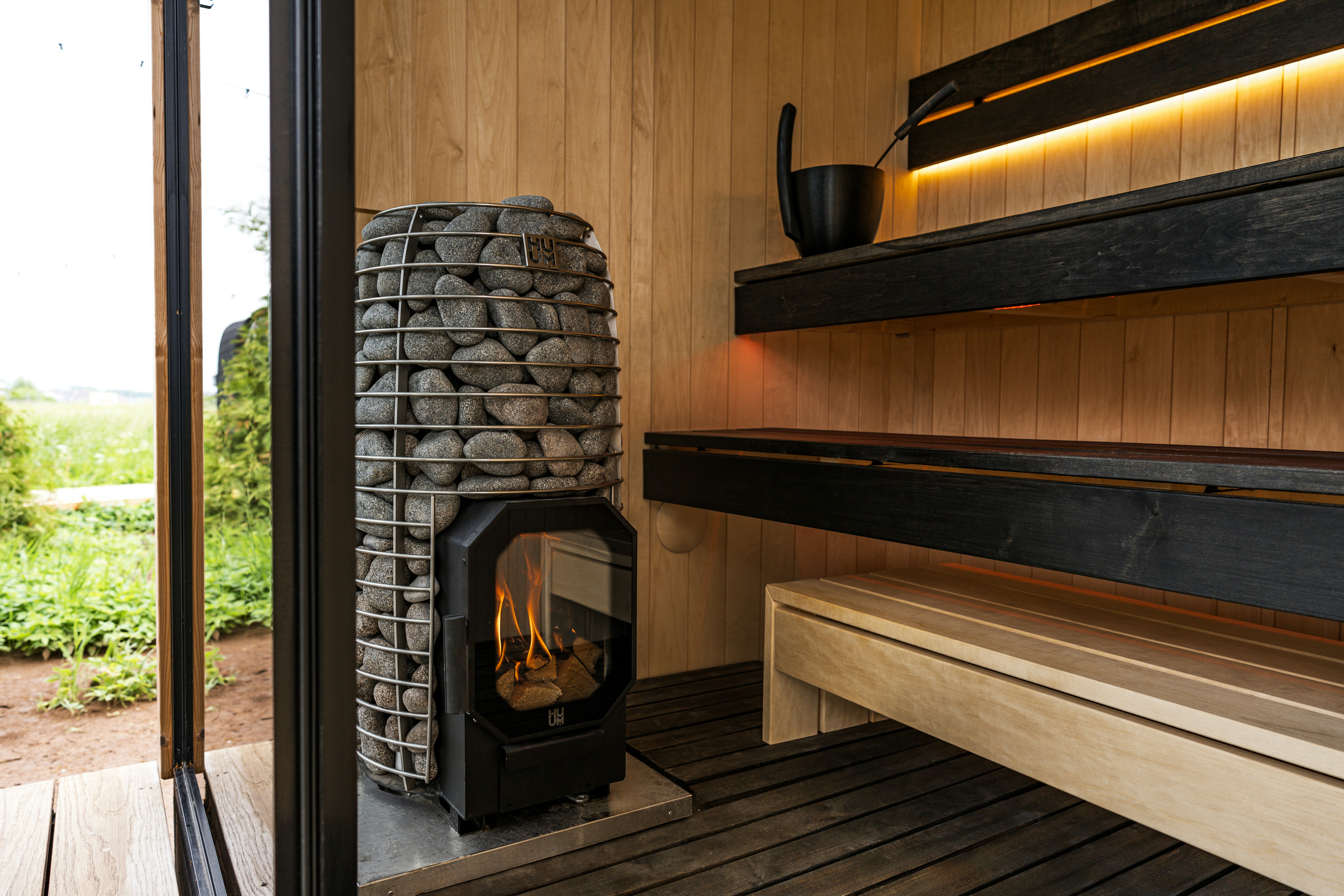
A wood-burning sauna is about as simple as heating gets. You build a fire in a small stove inside the room, and the fire heats a pile of rocks sitting on top of it. Once those rocks are hot, you throw a ladle of water on them and the room fills with heat. That's it. No wiring, no thermostat, no electricity at all — just fire, stone, and water. It's the oldest version of the sauna, and it still works exactly the way it did a thousand years ago.
The main benefit is the experience. Wood stoves usually hold a lot more rock than electric heaters do — often 100 to 300 pounds or more. More rock means more stored heat, which means the steam tends to feel fuller and last longer when you pour. The heat also rises and falls naturally as the fire burns, which a lot of people describe as feeling more alive than the steady output of an electric heater. Add the crackle of the fire and the smell of woodsmoke, and it becomes something you do rather than something you use. There's also the practical side: no power bill, no electrician, and no dependence on the grid. If you have your own trees or cheap firewood, running it costs almost nothing.
The drawbacks are all about effort and logistics. Every session starts with 30 to 45 minutes of building and tending a fire before the room is ready. You can't set a temperature and trust it — you manage it by feeding the fire and adjusting the air. You need somewhere to buy or cut firewood, split it, stack it, keep it dry, and haul it, plus you'll be cleaning out ash and dealing with chimney buildup. And because it involves an actual fire, it needs a chimney and safe clearances from anything flammable, which in practice means it has to be a standalone outdoor building. Some towns even restrict them because of smoke.
Worth knowing: wood doesn't actually get hotter than electric. Both land in the same 150 to 195°F range, and sauna builders will tell you the differences people notice usually come down to how much rock the heater holds and how the room is ventilated, not the fuel. So if you're choosing wood expecting better heat, that's not really the reason to do it.
When wood is the right call: You have land, or at least a backyard with room for a separate building. You're off the grid, or your power is unreliable, or running a new 240V circuit to the spot would be expensive or impossible. You have access to firewood that's free or close to it. You're at a cabin or lakeside property where the sauna is a weekend event rather than a weekday habit — somewhere the slow build-up is part of the appeal, not an obstacle. And most importantly, you're the kind of person who genuinely enjoys the fire. If splitting wood and getting a fire going sounds relaxing, wood will make you happy.
When electric makes more sense: You want to use the sauna often, on ordinary weekdays, without planning around it. You're putting it indoors — a basement, spare bathroom, or garage — where a chimney isn't an option. You live in a condo, townhouse, or on a small city lot. Or you simply want to press a button and have it ready. The honest test is this: a sauna only pays off if you actually use it regularly, and a 45-minute fire before every session is the thing most likely to stop that from happening. If you can picture yourself skipping it on a Tuesday because of the setup, buy electric.