top of page
Electric Sauna
Electric Saunas: Traditional Heat, Modern Convenience
Real heat. One touch away.
Stones, steam, and 190°F of real heat — without the firewood, the chimney, or the 45-minute wait. Press start. Walk away. Step into a sauna that's ready when you are.
The Difference
Three kinds of heat. Only two are saunas.
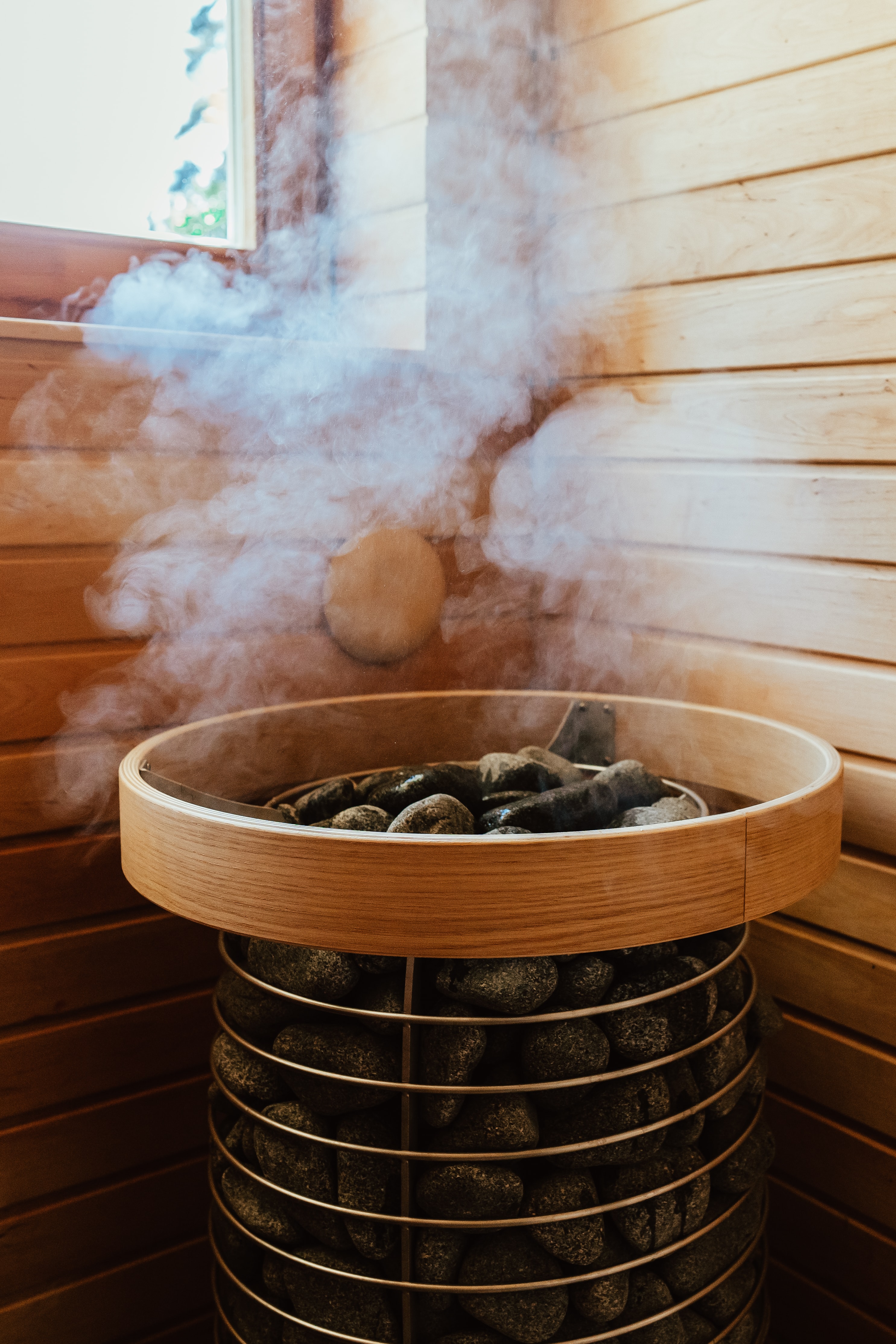
Real heat starts with stone. Heat the stones, ladle water over them, and the room comes alive the way sauna has for centuries. Wood-fired and electric saunas both do this. Infrared cabins don't. With no stones, there's no steam, no water bucket, no ritual, and air temperatures that top out below where a real sauna begins. Comfortable? Yes. A sauna? No.
Wood-fired vs. electric: same heat, different life.
Both reach 150–195°F. Both deliver real heat. Ask any sauna builder and they'll tell you the same thing — what you feel on the bench comes down to stone mass, humidity, and ventilation, not the fuel. A large-stone electric tower and a wood stove are remarkably hard to tell apart.
What separates them is everything else. Wood means sourcing, splitting, and stacking hardwood. It means a chimney, fire clearances, and an outdoor-only build. It means 45 minutes of tending a fire before every session. Electric means pressing a button.
Why It Matters
The best sauna is the one you actually use.
The research is clear that sauna benefits scale with frequency. In the landmark Finnish studies following thousands of men for two decades, cardiovascular mortality dropped sharply as sauna sessions increased — from 10.1 per 1,000 people per year among once-weekly bathers to 2.7 among those going four to seven times a week.
Four sessions a week beats two a month, every time. Which means convenience isn't a luxury feature. It's the mechanism.
And it's worth knowing where that evidence comes from: traditional, stone-heated saunas. Not infrared. An electric heater reproduces those exact conditions.
Built for Real Life,
Set it and forget it.
Thermostatic control holds your temperature precisely, session after session. Set 180°F, get 180°F — no peaks, no fade, no guessing. Heat bathing becomes a practice instead of an event.
Fits where you live.
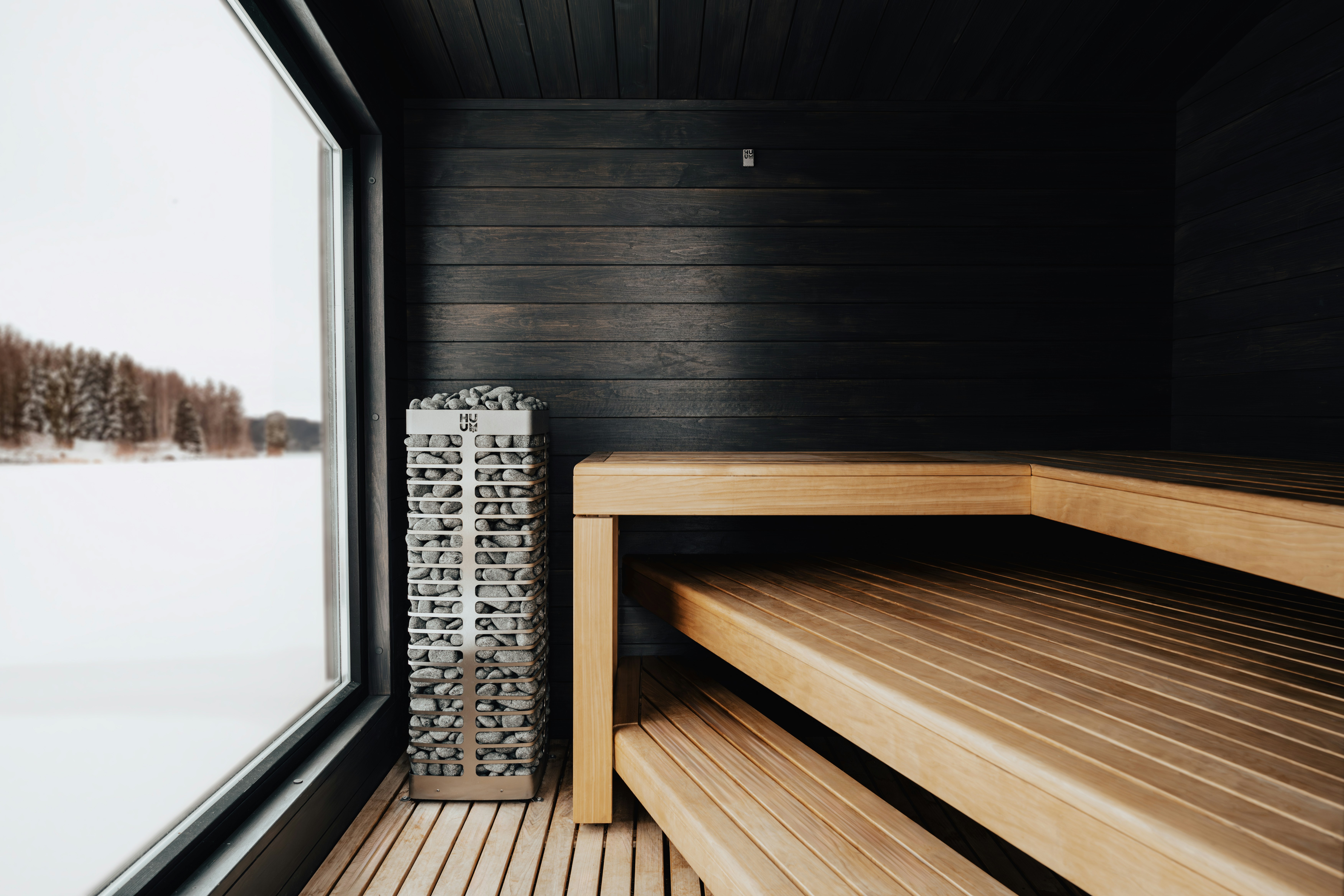
No combustion. No flue. No open flame. Basements, spare bathrooms, garages, condos — an electric sauna goes places a wood stove legally can't. If you're on an urban lot or in a strata building, this isn't the compromise. It's the only real option.
Nothing to buy, haul, or clean.
No cords of wood. No ash. No creosote. Restack the stones now and then; that's the maintenance.
Cheaper than the coffee you'd skip.
A 6 kW heater runs about $0.90 for a full hour at typical rates — and because the thermostat cycles once you're up to temperature, real-world use costs less than the nameplate suggests.
Straight Talk
We'd rather you buy the right sauna than the wrong one.
Electric heaters need a dedicated 240V circuit and a licensed electrician — real installation cost, and older panels sometimes need work first. No grid, no sauna, so off-grid cabins may still be better off with wood. Many electric units carry less stone than a wood stove, though a large-stone tower closes that gap. And if the crackle of a fire is the whole reason you want a sauna, we understand completely.
For everyone else, electric isn't the fallback from wood. It's the upgrade.
Find Your Fit
Sizing comes down to one number: roughly 1 kW of heater output per 45–50 cubic feet of insulated interior, plus 20–30% more for glass, high ceilings, or outdoor walls. Tell us your room and we'll spec it properly
instant startup, precise control, indoor installation, no fuel logistics, and the strongest evidence base in the category. It isn't the practical fallback from wood. It's the better choice.



bottom of page